Griha Pravesh in Your New Villa: Muhurat 2026, Rituals and Move-in Checklist
Published : 15-Oct-2026
Griha pravesh is the traditional Hindu housewarming ceremony held when a family first enters a new home, and its date is chosen from the panchang. If you are taking possession of a villa this season, the griha pravesh muhurat 2026 list is short, with 14 listed dates across November and December.
Panchang listings show no griha pravesh muhurat in August, September or October 2026, and the first window begins on 11 November. This guide covers the dates, the main rituals, a pre-move checklist and a move-in checklist for a villa.
What Griha Pravesh Means and Why It Matters
Griha pravesh is a traditional Hindu housewarming ceremony performed when moving into a new home. According to Wikipedia's overview of Grihapravesha, the ritual is believed to purify the house, invite prosperity and seek divine blessings for the residents, and it is performed following auspicious astrological timings.
The same Wikipedia entry notes that Vastu Shastra prescribes griha pravesh in three forms. Apurva is performed on the first entry into a newly constructed home, Sampurva when a person enters a home after arriving from a foreign land, and Dvandva when a person enters after reconstruction or renovation. A buyer taking possession of a newly built villa would be looking at the Apurva form.
An independent villa adds its own preparation, from the gate and boundary to the outdoor areas guests will use. The sections below cover the dates, the rituals and a checklist you can adapt to your home.
Griha Pravesh Muhurat 2026: Dates to Know
Panchang sources such as Swarnsiddhi and Pujahut list 6 dates in November and 8 in December 2026. The table below follows their common listings.
Date | Day | Muhurat window |
11 November | Wednesday | 06:40 AM to 11:38 AM |
14 November | Saturday | 08:24 to 11:23 (confirm AM or PM locally) |
20 November | Friday | 06:56 AM to 06:31 AM next day |
21 November | Saturday | 04:56 AM to 05:54 AM next day |
25 November | Wednesday | 06:52 AM to 06:52 AM next day |
26 November | Thursday | 06:52 AM to 05:47 PM |
2 December | Wednesday | 10:51 PM to 06:58 AM next day |
3 December | Thursday | 06:58 AM to 09:23 AM |
4 December | Friday | 10:22 AM to 11:44 PM |
11 December | Friday | 03:04 AM to 07:04 AM next day |
12 December | Saturday | 07:04 AM to 02:06 PM |
18 December | Friday | 11:14 PM to 07:09 AM next day |
19 December | Saturday | 07:09 AM to 03:58 PM |
30 December | Wednesday | 07:13 AM to 12:36 PM |
Wikipedia notes that the muhurta is usually described in consultation with an astrologer or a Hindu priest. Confirm your exact window with your pandit or on Drik Panchang before you send out invitations.
Dhanteras falls on 6 November, which describes as a day widely used for buying property and household items just before a griha pravesh. Weekend dates such as 14 and 21 November and 12 and 19 December may make it easier for relatives to travel. The listed windows on 12 and 19 December run for seven to nine hours, which leaves time for a full puja.
If none of these dates fit your possession schedule, Indiframe's 2026 and 2027 list names February, March and May 2027, along with November and December 2026, as the months with the widest choice.
Check These Before You Lock a Date
Confirm a few things with your builder before you book the pandit.
● The possession letter and registry are in your hands.
● Electricity and water connections are active, and the meter is in your name or in process.
● Finishing work such as paint, flooring, fittings and the boundary wall is complete or has a firm completion date.
● Gas pipeline, borewell or water supply and drainage have been tested.
● The project's registration can be checked on the UP RERA website.
Griha Pravesh Rituals Step-by-Step
Customs differ by region, family and pandit, so let your pandit adjust it.
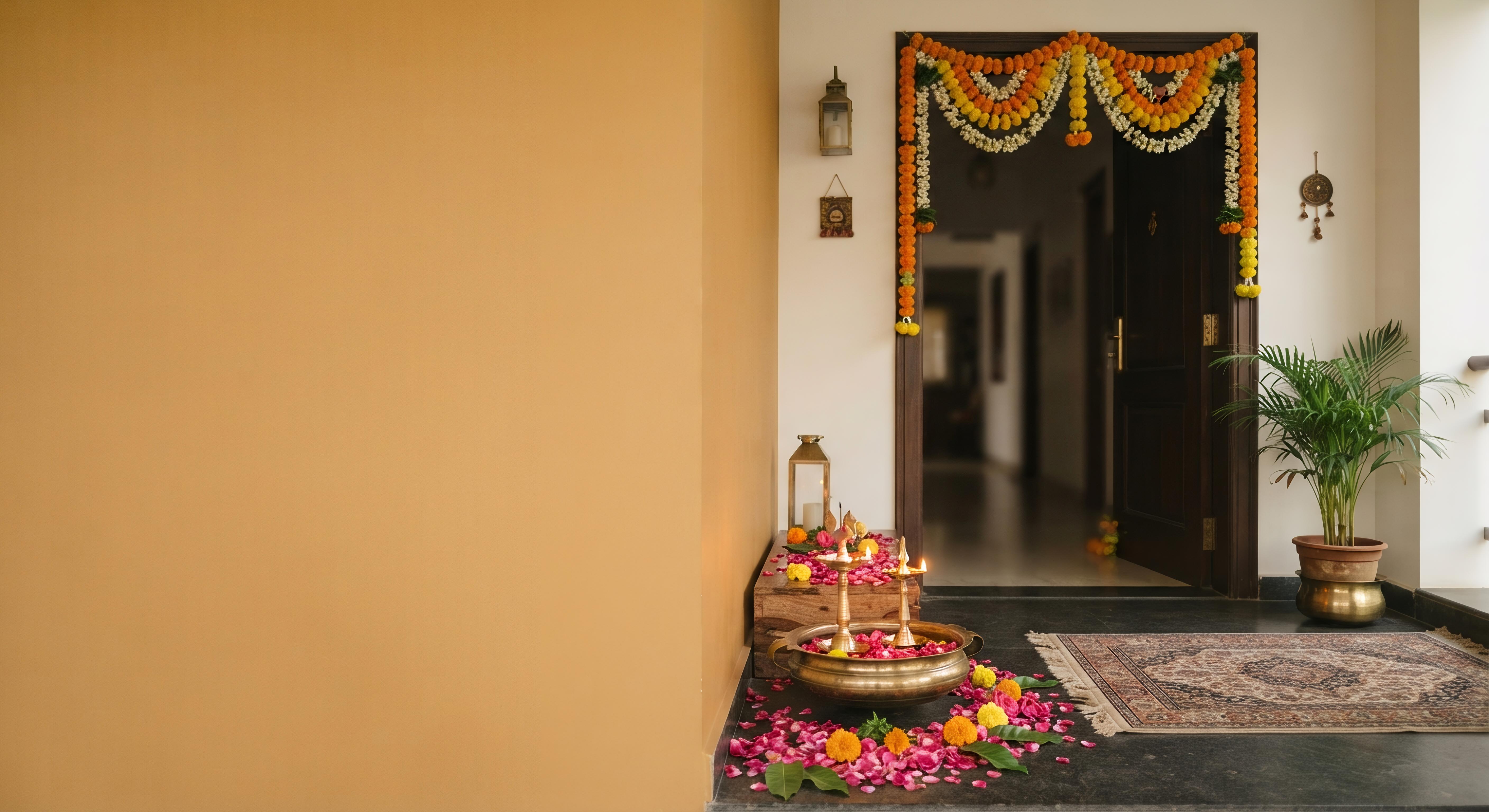
- Clean the house before the ceremony and decorate the entrance with rangoli and a toran.
- Complete the puja at the shubh muhurat estimated from the panchang.
- Perform the dwar puja. The owner of the house enters carrying a kalash filled with water, a coconut and mango leaves.
- Worship Lord Ganesha first, followed by Vastu Shanti and Vastu puja to honour the spirits of the land.
- Boil milk until it overflows, which is said to show an abundance of wealth and food in the household.
- Conduct the havan, a fire sacrifice meant to cleanse the atmosphere.
- Other pujas often included are Navagraha puja, Kalash Sthapana and Lakshmi puja, with Satyanarayan katha as an option.
- Traditional belief encourages the family to spend the first night in the new home after the puja.
Ask your pandit for the exact puja samagri list, since the rituals vary with regional traditions, family customs and the pandit's recommendations.
Move-In Checklist for Your Villa
These are practical suggestions in three phases, so adapt them to your home and your builder's handover process.
Two to four weeks before
● Book your pandit, caterer and movers early, since all 14 listed muhurat dates fall in November and December.
● Arrange a deep clean, pest control and a final walk-through with your builder's team to note any snags.
● Test every switch, socket, tap, flush, geyser and drain. Check the terrace for waterproofing and the water tank for leaks.
● Fit locks, a video door bell and CCTV for the gate and the boundary.
● Decide with your pandit where the puja space and the havan will go.
● Tell the community's security desk or society office about your date, so that guest vehicles, the pandit and the caterer can enter without delay.
● Keep the kalash, coconut, diya, matchbox, ghee, milk and sweets together in one tray near the entrance.
● Assign one family member to greet guests and another to manage the kitchen and food.
● Keep a first aid kit, drinking water and a fire extinguisher close to the havan area.
● Take photos before furniture goes in. They make a lovely record, and they help if you need to raise any snag later.
The first week
● Transfer electricity, water and gas bills to your name, and update your address on Aadhaar, bank accounts, driving licence and insurance.
● Buy home insurance that covers the building and the contents.
● Set up the garden, irrigation and outdoor lighting.
● Confirm maintenance charges, parking arrangements and visitor rules with the community office.
● Introduce yourself to your neighbours.
If you live outside India, Sanfran Group's NRI support page lists services that include home loan assistance, interior packages and NRI-exclusive offers. Sorting out the pandit and the interiors before you travel can leave your visit free for the ceremony.
Whether you are choosing a muhurat for this December or looking at villas for the 2027 dates, you can browse the full portfolio on the Sanfran Group projects page, read more home-buying guides on the Sanfran blog or reach the team through the contact page.
Frequently Asked Questions
Q1. Which month is best for griha pravesh in 2026?
November and December have all the listed dates for the rest of 2026, with 6 muhurats in November and 8 in December. There are none in August, September or October.
Q2. Should griha pravesh happen before I move in?
The puja should ideally be performed before moving into the new home. If you have to shift immediately, it can still be conducted later to seek blessings.
Q3. Which nakshatras are considered auspicious for griha pravesh?
99Pandit lists Rohini, Mrigashira, Uttara Phalguni, Chitra, Anuradha, Uttara Ashadha, Uttara Bhadrapada and Revati as generally auspicious. The final muhurat should be chosen after considering the homeowner's horoscope and the local panchang.
Q4. Do I need a pandit?
A priest is not mandatory, but an experienced pandit helps ensure the rituals and mantras are performed correctly. Wikipedia adds that the muhurta is usually described in consultation with an astrologer or a Hindu priest.